
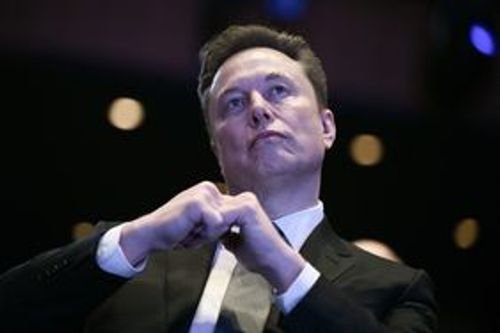
At the recent annual shareholders’ meeting of Tesla, Inc. (held in late 2025), Elon Musk outlined a sweeping and provocative vision for the future of humanity. Among the many ambitious predictions, one stood out: within the next 20 years, he believes it may become possible for humans to upload their consciousness into robot bodies and thereby achieve a form of “living forever”.
What did he say?
- Musk stated that via his companies and associated ventures (notably Neuralink and Tesla’s humanoid-robot project Optimus), the technology might advance to the point where a “rough snapshot” of a person’s brain or mind-state could be transferred into a robot body. Blockchain News+2Benzinga+2
- He emphasised that although one would “not be quite the same as you are today,” the preserving of memories and personality could be feasible. Benzinga+1
- The claim ties into broader ambitions by Musk to blur the lines between humans and machines, extend human capability, and perhaps transcend biological limitations. The Street+1
The technological underpinnings
Musk’s vision rests on several key technological threads:
- Brain-computer interfaces (BCIs): Through Neuralink, Musk’s teams are already working on devices that link the human brain to computers or machines. For example, Musk has said a “whole-brain interface” is physically possible, which would allow a brain’s state to be “backed up” and restored into another body (biological or robotic). The Street+1
- Robotic bodies as hosts: Tesla’s Optimus robot is intended as a general-purpose humanoid robot. Musk envisions these robots eventually being more than tools—they might become extension bodies for humans or for “uploaded” minds. Benzinga+1
- Mind-uploading / digital preservation of identity: The idea is that one’s consciousness (memories + personality + “mind-state”) could be stored, transferred or instantiated in a non-biological substrate. Musk says this is “definitely possible,” though still far off. The Street+1
Why “within 20 years”?
While Musk did not provide a detailed roadmap in public remarks, the 20-year timeframe arises from recent commentary noting that a “mind upload to a robot body” might be feasible in that timeframe. For example, one article summarised Musk’s comments as predicting such capability “within the next 20 years”. Blockchain News
It’s worth emphasising: this is highly speculative. Musk himself acknowledges major technical challenges remain. CNBC+1
What would this mean for humanity?
If Musk’s vision came to pass (even partially), the implications would be profound:
- Extended (perhaps indefinite) life: If consciousness can be preserved and transferred, death of the biological body might no longer mean the end of self — at least in the theoretical sense.
- Redefinition of “human”: If human minds inhabit robotic bodies or digital substrates, what remains of “being human” and of identity? Philosophical questions around continuity of self, personal identity, and consciousness would dominate.
- Social, legal and ethical upheaval: Who gets access? What rights would a robotic “you” have? Would uploaded minds have personhood? Would inequality widen as those who can afford “immortality” separate from those who cannot?
- Economic and labor impacts: If humans can live longer, work in robotic bodies, merge with machines— the nature of labour, productivity and purpose may shift dramatically.
- Risk of overreach: Technologies this powerful bring risks–technical failure, ethical abuses, potential for dystopian outcomes.
Skepticism and scientific caution
While the vision is bold, there are many reasons to be cautious:
- Neuroscience today has not mapped the full structure and function of the human brain in a way that would allow full “mind uploading”. Experts say scanning every neuronal connection and replicating the entire functional architecture remains far off. CNBC+1
- Consciousness itself remains poorly understood scientifically: is it merely a pattern of information, or something deeper? Uploading may replicate behaviour, but would it preserve subjective experience (the “qualia”)?
- The step from “we might store a rough snapshot of mind-state” to “you can live forever in a robot” is enormous—technically, biologically, ethically.
- Musk has made many futuristic predictions before; while visionary, they often stretch optimistic timelines.
- Even Musk has acknowledged that, regarding live-forever scenarios, he personally isn’t necessarily committed to living indefinitely. CNBC
What to watch for going forward
Here are key developments to monitor:
- Progress by Neuralink in human trials of brain-computer interfaces and increasingly fine-grained neural recording & stimulation.
- Advances from Tesla/Optimus robotics: how capable are the robots? Do they approach human-level dexterity, autonomy and robustness?
- Academic and industrial work in mapping the human brain (“connectomics”), and in brain simulation or emulation.
- Ethical, legal and policy frameworks emerging around human augmentation, machine-embedded consciousness, personhood for robots.
- Societal reaction: how will public opinion, regulation, inequality concerns respond to the possibility of “digital immortality”?
Final thoughts

Elon Musk’s prediction—that humans may be able to live forever by uploading their consciousness into robots within about two decades—is one of the most audacious visions of our time. It touches on the deepest questions: what we are, what we might become, and what it means to “live”.
Whether this vision is fully realised, partially realised, or misses the mark, it nonetheless forces us to grapple with the future of humanity in a world increasingly merging biology, machines and artificial intelligence.


Leave a Reply