
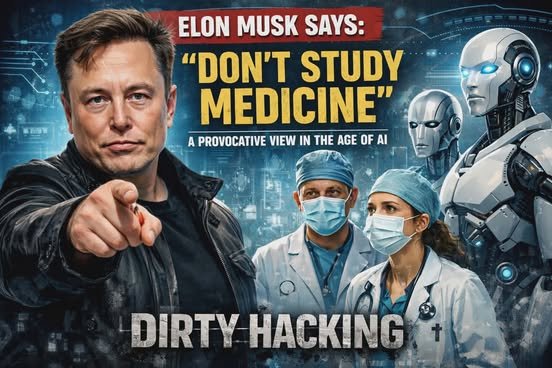
Elon Musk is no stranger to controversial opinions. From artificial intelligence to space travel, the billionaire entrepreneur has repeatedly challenged traditional thinking about careers, education, and the future of work. One of his most provocative ideas is the suggestion that studying medicine may not be the wisest path for young people today — a statement that has sparked debate, criticism, and reflection across the world.
At first glance, discouraging medical studies sounds reckless. Doctors and healthcare professionals are among the most respected and essential workers in society. Medicine is often viewed as a safe, stable, and noble profession. So why would someone like Musk question it?
The answer lies largely in his views on artificial intelligence.
The Rise of AI in Healthcare
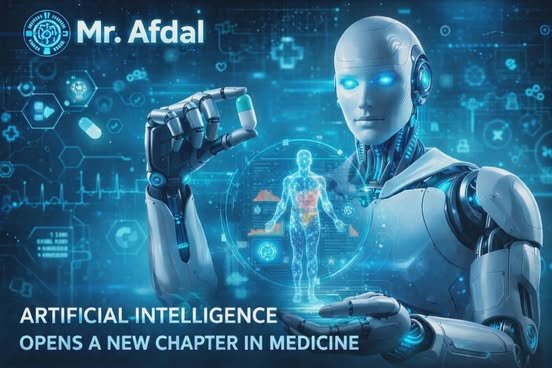
Musk has long warned that AI will surpass human intelligence in many fields, and medicine is no exception. Diagnostic tools powered by AI are already capable of analysing scans, detecting diseases, and predicting health risks with remarkable accuracy. In some cases, these systems outperform human doctors, particularly in pattern recognition tasks such as radiology, pathology, and dermatology.
From Musk’s perspective, spending more than a decade studying medicine — often at great financial and emotional cost — may not make sense if machines can eventually perform many of the same tasks faster, cheaper, and with fewer errors. He argues that future healthcare will rely more on technology than traditional medical expertise.
A Misunderstood Message?
Critics argue that Musk’s statement oversimplifies medicine and undervalues the human element of healthcare. Doctors do far more than diagnose illnesses. They provide emotional support, ethical judgement, complex decision-making, and human connection — qualities that machines cannot easily replicate.
Moreover, medicine is not a single profession but a vast field. While AI may transform areas like diagnostics, it is far less capable of replacing surgeons, general practitioners, psychiatrists, or emergency doctors in the foreseeable future. The idea that medicine will become obsolete ignores the complexity of human health and society.
Education Versus Adaptability
What Musk may truly be criticising is not medicine itself, but rigid career paths that fail to adapt to technological change. He often encourages young people to focus on problem-solving, critical thinking, and learning how systems work, rather than chasing prestigious degrees for their own sake.
In that sense, his message is less “don’t study medicine” and more “don’t assume traditional careers are future-proof”. The modern world is changing rapidly, and professions once considered untouchable are now being reshaped by automation and AI.
The Value of Purpose
Despite the risks, many still choose medicine for reasons beyond money or job security. The desire to help others, contribute to society, and make a tangible difference remains powerful. Even in a highly automated future, healthcare will still require compassion, trust, and responsibility — qualities that technology alone cannot provide.
Rather than abandoning medicine, the future doctor may need to work alongside AI, using it as a tool rather than seeing it as a threat. Medical education itself may evolve, placing greater emphasis on ethics, communication, and interdisciplinary skills.
Conclusion
Elon Musk’s statement should not be taken as a literal command, but as a challenge to conventional thinking. Medicine is not dying, but it is changing. Those considering a career in healthcare must be aware of technological disruption and be willing to adapt.
Ultimately, the question is not whether one should study medicine, but how education can prepare people for a future where human intelligence and artificial intelligence work side by side. In that future, the most valuable professionals may not be those who memorise the most information, but those who can think critically, act ethically, and care deeply.



Leave a Reply